
The Short Answer
Nine times out of ten, a garage door that reverses mid-close or refuses to close at all is a safety sensor problem. The two small eyes near the bottom of the tracks are designed to stop and reverse the door if anything breaks their beam, and they're also the first thing to act up when they get dirty, bumped, or knocked out of alignment. That said, sensors aren't the only culprit. If the eyes are clean and lined up and the door still won't cooperate, the problem is usually mechanical — something with the limit settings, the track, or the springs — and those need a different fix entirely.
What You'll Notice
- The door starts down, stops a few inches or a foot from the floor, and reverses all the way back open.
- The door won't move downward at all when you press the button — opener hums, light blinks, but nothing happens.
- The opener's indicator light flashes a specific number of times (check your owner's manual; most modern openers use this to point at a sensor or force issue).
- The door closes fine some days and not others, especially after a temperature swing or a hard frost.
What a Technician Checks, in Order
1. Safety Sensors (Photo Eyes)
This is step one because it's the most common fix and the fastest to rule out. Look at the two small sensors mounted a few inches off the floor on each side of the door. They need to be clean, facing each other dead-on, and unobstructed. A spiderweb, a leaf blown in during fall cleanup, road salt residue tracked in on tires, or a sensor that's been bumped by a bike or snow shovel can all throw off the alignment. Wipe the lenses with a soft cloth and check that both LED lights are solid, not flickering. If one sensor's bracket has loosened over time, it just needs to be re-aimed and tightened.
2. Close-Force and Limit Settings
If the sensors check out, the next thing a technician looks at is how the opener is programmed to sense resistance. Every opener has a close-force limit — how much push-back it allows before deciding something's in the way and reversing. Big seasonal temperature swings common to this area can change how a door moves through its tracks (metal contracts in the cold, grease thickens, rubber seals stiffen), which shifts the amount of resistance the opener feels on a normal cycle. If the force setting is too sensitive, the opener reads that extra resistance as an obstruction and reverses. This is adjusted at the opener unit itself and usually takes a few test cycles to dial in correctly.
3. Tracks and Rollers
Next is a visual and physical check of the tracks. Ice buildup, road salt residue, or a track that's gotten slightly bent from a bump (plow trucks, a stray basketball, a trailer hitch) can cause the door to bind partway through its travel. A door that binds often gets read by the opener as resistance, triggering a reverse. Fixing this means straightening or re-securing the track, cleaning out debris, and relubricating the rollers with a garage-door-specific lubricant rather than household oil, which gums up in cold weather.
4. Springs
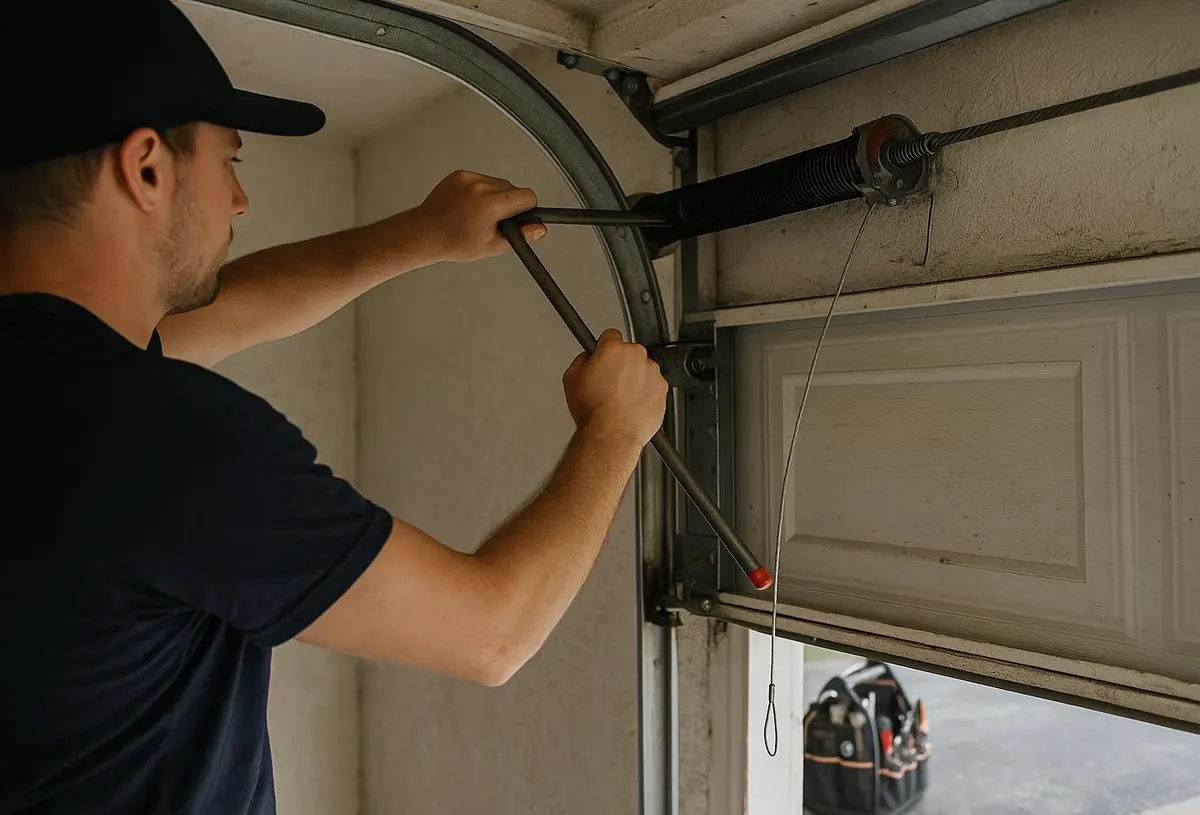
If everything above looks fine, springs are next. A torsion or extension spring that's lost tension makes the door heavier than the opener expects. The motor strains to pull it down, feels resistance it isn't programmed for, and reverses — or in some cases just stalls without doing anything. Worn springs are also a safety issue: a door that's out of balance can drop suddenly or put extra strain on the opener's gears. Spring replacement isn't a DIY repair; these are under heavy tension and need to be swapped by someone with the right bars and experience.
5. Opener Logic Board
Last on the list, because it's the least common, is the opener's circuit board itself. Power surges, age, or moisture intrusion can cause a board to misread sensor signals or force settings even when the hardware is fine. This usually shows up as inconsistent behavior that doesn't match any physical cause — and at that point, the opener itself may need repair or replacement rather than a tune-up.
When to Call Louisville Garage Door
If you've wiped the sensors, checked alignment, and the door still won't close reliably, it's time to get a technician out before the real cold sets in and a stuck-open door becomes a bigger problem. Louisville Garage Door handles everything from sensor and opener adjustments to full Spring Replacement and Garage Door Opener Repair & Installation, and we'll walk you through what's actually wrong before any work starts.
Don't wait for a cold snap to find out your garage door won't close. Call Louisville Garage Door today to get it sorted before winter settles in across Louisville, OH.