
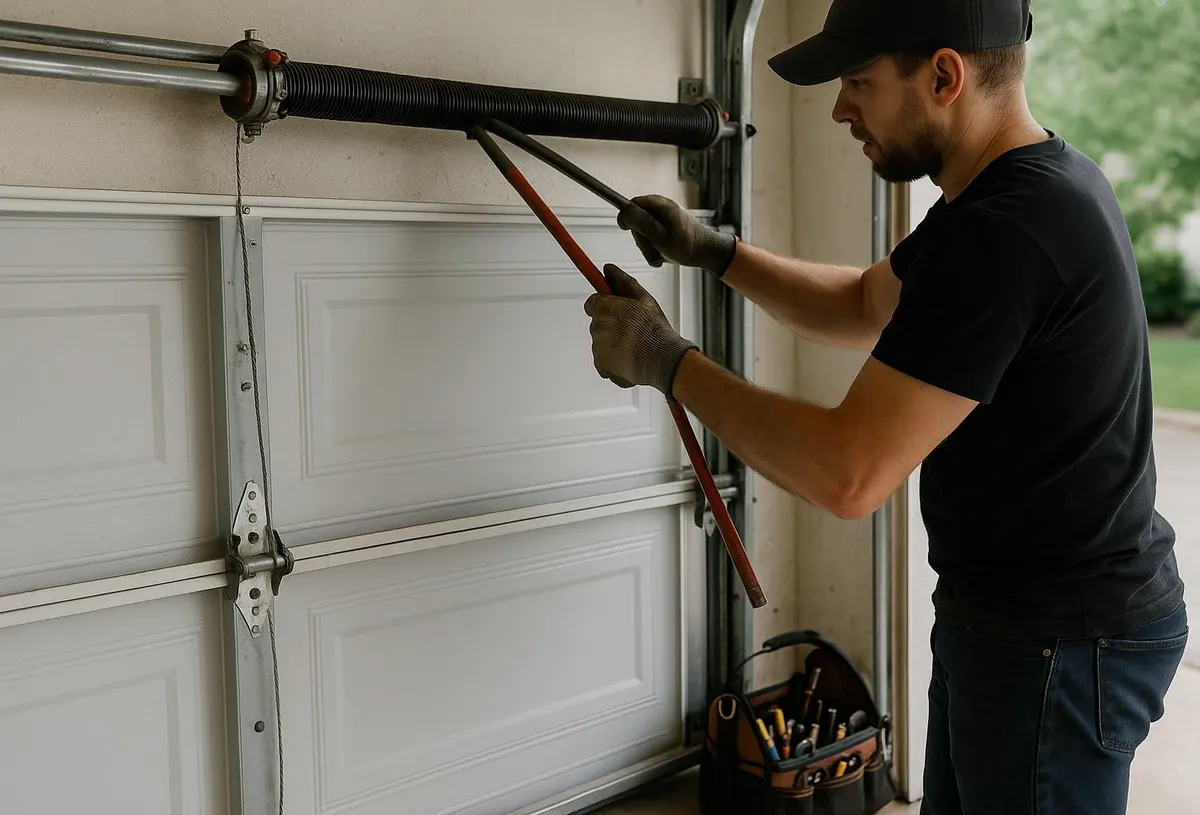
You hit the remote on your way to bed, and instead of a quiet whir, the whole garage sounds like a metal trash can getting dragged down a driveway. The dog barks. A window rattles. You stand there wondering if this is the night the door finally quits on you. It's not usually that dramatic — but a loud opener is your garage door telling you something has loosened, dried out, or worn down, and it's worth listening to before a small rattle turns into a stuck door on a sub-zero morning.
Here's how to work through the problem in order, starting with the fixes that take ten minutes and ending with the point where it's time to hand it off.
Tools You'll Need
- Socket wrench or adjustable wrench
- Phillips and flathead screwdrivers
- Garage door lubricant (silicone or lithium-based spray — not WD-40, which washes off and attracts grit)
- Step ladder
- Flashlight
- Rag
Step-by-Step: Quieting the Noise
1. Tighten every nut, bolt, and bracket
Start at the motor unit and work your way down the track to the door itself. Garage doors flex every time they open and close, and in a region with the kind of temperature swings Louisville, OH gets — humid summer heat, then hard winter cold — metal expands and contracts constantly. That movement works hardware loose over months. A socket wrench and twenty minutes is often most of the fix right there.
2. Lubricate the moving parts
Spray lubricant on the rollers, hinges, the track, and the opener's drive screw or chain. Skip the springs for now — those are a different animal and come with real risk. Dry, squeaky rollers are one of the most common causes of a grinding or squealing noise, especially heading into winter when cold air thickens old grease and everything moves stiffer than it should.
3. Check the rollers themselves
With the door closed, look at each roller as it sits in the track. Cracked, flat-sided, or visibly worn nylon rollers are a cheap fix — most hardware stores carry replacement sets. Metal rollers that are original to an older door are usually the loudest part of the whole system and a common upgrade when homeowners are chasing quiet.
4. Inspect the hinges and look for rust
Road salt and winter moisture don't stay outside — they track in on tires and boots, and over a few seasons that humidity and salt residue can start corroding hinges and track hardware, especially in garages that aren't heated. Rust creates friction, and friction creates noise. Wipe down hardware and apply lubricant generously if you see surface rust starting.
5. Check the garage door opener's mounting
If the motor unit itself is vibrating against the ceiling bracket, that vibration transmits through your rafters and gets a lot louder than it should be. Rubber isolation mounts (sold at most hardware stores) go between the opener and the bracket and can noticeably cut down on that specific boom-and-rattle sound.
6. Listen for where the noise is actually coming from
Run the door up and down once more and try to pinpoint the sound. A grinding noise near the motor, a banging at the top of the track, or a popping sound during travel all point to different problems — and some of them are past the point of a spray can and a wrench.
Where This Becomes a Job for a Technician
A homeowner can safely handle hardware tightening, lubrication, and swapping worn rollers. Beyond that, a few things are worth leaving alone:
- Springs — torsion springs are under extreme tension and are genuinely dangerous to adjust or replace without the right tools and training.
- Cables and pulleys — a frayed cable can snap under load.
- Track alignment — a track that's slightly bent or misaligned can bang loudly with every cycle, and bending it back without the right technique often makes it worse.
- Opener gear and sprocket wear — a chain-drive opener that's grinding from the inside usually means internal gears are worn, which means opening the unit itself.
Consider a Belt-Drive Swap
If you've tightened, lubricated, replaced rollers, and the opener is still loud, the drive mechanism itself may be the culprit. Chain-drive openers are reliable but inherently noisier — metal chain on a metal sprocket. A belt-drive opener uses a reinforced rubber belt instead, which runs dramatically quieter and handles temperature swings well, making it a solid fit for an attached garage near a bedroom or a detached garage you still want quiet. This isn't a weekend swap for most homeowners; it involves rewiring safety sensors, resetting travel limits, and mounting a new rail system correctly.
When to Call Louisville Garage Door
If you've worked through the easy fixes and the noise hasn't budged — or if you hear grinding from the motor, banging at the track, or anything that sounds like metal under strain — it's time to call in a technician rather than keep guessing. Louisville Garage Door can run a full Garage Door Maintenance check to catch worn rollers, loose hardware, and early rust before winter ice makes everything worse, and if the opener itself is the problem, our Garage Door Opener Repair & Installation service covers everything from fixing worn gears to installing a quiet belt-drive system built for Stark County winters.
Don't wait for a quiet rattle to turn into a door that won't open on a cold morning. Call Louisville Garage Door today and let a local technician take a listen.